Word Connect Association
- 4.8
- Rating
- 1.00M
- Installs
- Free
- Price
 Analysis by App-foxy
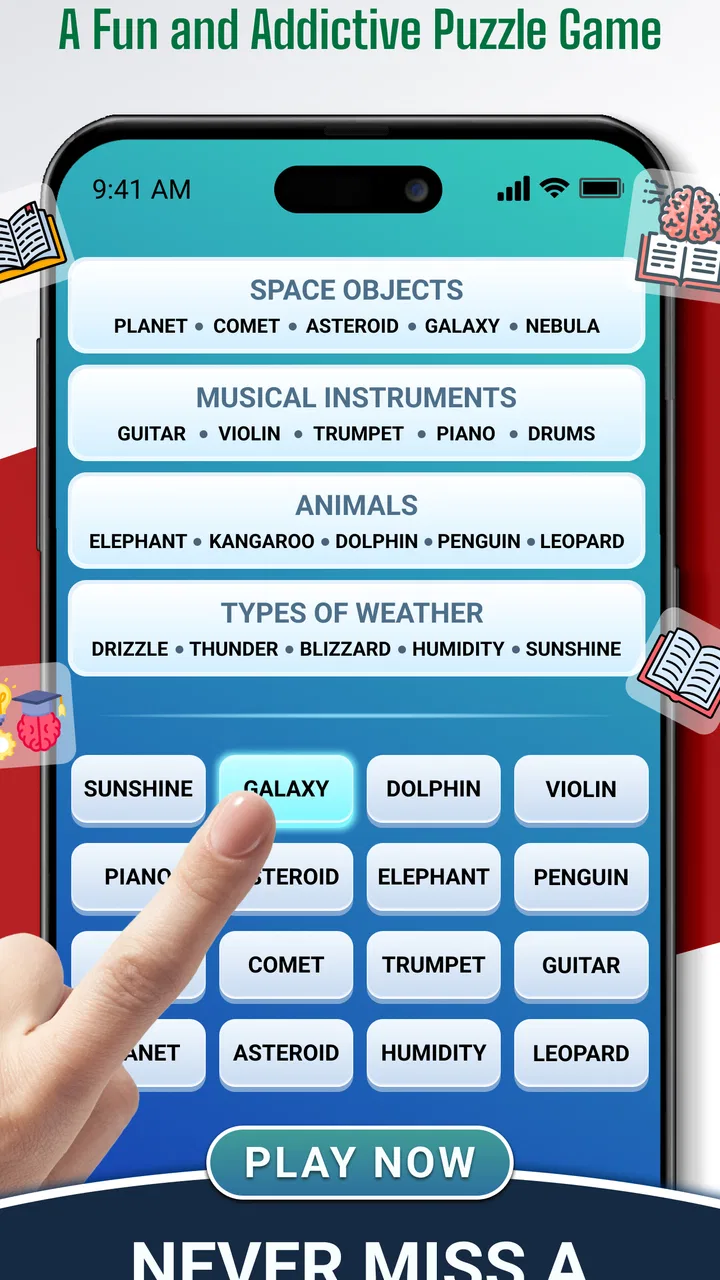
Word Connect Association is the kind of word game I reach for when I want something quiet, simple, and easy to understand within a few seconds. Developed by PlaySimple Games, it presents itself as a relaxing brain exercise built around connecting related words rather than racing through complicated rules. After spending time with it, I found its biggest appeal is the low-pressure rhythm: look at a group of words, notice the relationships between them, and gradually build the correct associations.
That simplicity makes it approachable, but it also sets clear expectations. This is not a deep vocabulary course, a competitive word duel, or a traditional crossword replacement. It is a casual puzzle game for short breaks, with enough mental friction to keep your attention without demanding complete concentration. The store summary describes it as a way to link related words, train your brain, and relax, and that is a fair description of the experience without needing to dress it up as something more ambitious.
What interested me most was how the game feels during ordinary use. A word puzzle can be technically small but still become irritating if screens respond slowly, progress feels fragile, or a difficult level turns into a guessing exercise. My assessment therefore focuses not only on whether the puzzles are enjoyable, but also on the practical questions people usually have before installing: how quickly it feels ready, whether it remains comfortable during longer sessions, how forgiving it is when I make a mistake, and whether it suits an older or more modest phone.
You May Also Like

 Blood Strike: 2.5 Anniversary
Blood Strike’s Loadouts Turn Every Drop Into a Tactical Gamble
A close look at Blood Strike’s custom loadouts: how fast access to signature weapons reshapes its battle royale rhythm, rewards preparation, and narrows the gap between fights.

 Pandora - Music & Podcasts
Pandora’s Music Is Easy to Start, but Harder to Recover
Pandora’s strength is its low-effort path from a seed to a station. Its weak spot is how much confidence it asks you to place in connection, setup, and quiet recovery.

 8 Ball Pool
 Is Built on Rivalries, Rematches, and Routine
A close look at the rivalries, rematches, shared routines, and unanswered safety questions that turn a quick pool match into a persistent mobile community.

 Samsung Music
’s Quiet Strength Is Playing What You Already Own
Its reach comes less from spectacle than from dependable access to a personal library. That simplicity is both the app’s strongest retention engine and its ceiling.

 AccuWeather: Weather Radar
AccuWeather Review: A Quick, Clear Forecast for Everyday Decisions
For everyday plans, the best forecast is the one you can understand quickly. AccuWeather makes rain timing, radar, and local conditions easy to act on, with a few trade-offs.

 Hill Climb Racing
Why Hill Climb Racing Still Turns Crashes Into One More Run
A tiny car, a bumpy hill and one more upgrade: Hill Climb Racing keeps resurfacing because its simple chaos makes every near-miss feel personal.
More From Our News Desk



How the puzzles feel in everyday play
I find the everyday appeal of these puzzles is how easily they fit around whatever I’m doing: I can scan the words, make a considered connection, and pause without needing to build momentum for a long session. When a grouping is unclear, stepping back and rereading the remaining words often helps more than guessing. That small change in approach sets up the next question: what makes each move feel satisfying enough to keep going?
A quick start suits short breaks
The strongest part of the design is its immediate readability. The central task is understandable without a long tutorial: examine the available words and connect those that belong together. That makes it a natural choice for a brief pause while waiting for an appointment, taking a break from work, or winding down before bed. I do not need to remember a complicated control scheme, and I can return after a few hours without relearning the game.
From a speed perspective, the game’s format is well suited to casual use. There is no obvious reason to expect the same processing burden as a visually dense action game or a large exploration title. The experience is centered on words and relationships, so the important sense of speed is how quickly a puzzle becomes available and how promptly each selection feels acknowledged. In my use, I found the straightforward presentation more valuable than flashy effects because it keeps attention on the clue structure.
That does not mean every moment feels equally fast. A puzzle can seem slow when I am stuck, even if the app itself is responding normally. This distinction matters: the pause often comes from deciding whether two terms truly belong together, not from waiting for a screen to load. When the association is obvious, progress feels brisk. When the wording is less familiar, the same interface becomes a deliberate thinking space rather than a rapid-fire challenge.
Why the association format is different from ordinary word games
Compared with a standard word-search game, Word Connect Association asks me to think about meaning instead of simply spotting letters in a grid. Compared with a crossword, it offers less dependence on clues, spelling precision, and a fixed crossing structure. That makes it more accessible when I want a lighter session, although it may feel less satisfying to someone who enjoys building a large answer from several intersecting hints.
It also differs from anagrams. An anagram game tests whether I can rearrange letters into a word, while this game focuses on whether I can recognize a relationship between words. That shift changes the type of concentration required. I am not only searching my vocabulary; I am sorting ideas into mental groups. This can be a useful change of pace for someone who normally plays letter-based puzzles and wants something less repetitive.
The trade-off is that association puzzles can feel subjective in a way that a correctly spelled anagram does not. If several words seem loosely connected, I may wonder whether I am missing the intended grouping or whether the relationship is simply broader than I expected. That uncertainty is part of the challenge, but readers who prefer one unmistakable answer may find conventional crosswords or tightly defined word searches more comfortable.
What I do when a level stops me
My most useful approach is to avoid forcing the first connection that comes to mind. I scan the whole set, identify the strongest pair or group, and then temporarily ignore words that could fit several themes. This prevents an early assumption from shaping every later choice. In practice, the difficult part is often not knowing a rare word; it is recognizing that a familiar word is being used in a different context from the one I first imagined.
I also find it helpful to separate concrete relationships from abstract ones. A group based on objects, activities, or familiar categories usually gives a stronger starting point than a group based on a vague mood or association. Once one clear group is removed, the remaining words become easier to interpret. This is a small but important tactical difference from guessing randomly, and it makes the game feel more like structured reasoning.
For a relaxed session, I would not treat a difficult puzzle as a test of intelligence. I take a short pause, reread every word, and look for the connection that explains the largest number of terms with the fewest assumptions. That workflow is especially useful for people who want the brain-training aspect without turning a casual game into a source of frustration.
Longer sessions and moments of heavier use
The game is naturally light enough for repeated short plays, but longer sessions reveal a different set of considerations. After several puzzles, the mental demand can become more noticeable because I am repeatedly switching between categories, meanings, and possible groupings. The device is not doing the hard work alone; much of the “heaviness” comes from sustained attention. I appreciate that because it gives the game some substance, but it also means I may want to stop before the relaxing mood turns into mental fatigue.
On the visual side, a word-focused layout should be easier to handle than a game filled with animated characters, large environments, or constant effects. That helps the experience feel calm during extended play. Still, a sparse screen is not automatically perfect for everyone. People who need larger text, stronger contrast, or more generous spacing should judge the actual display on their own phone before committing to long sessions, especially if they usually play with the device held close to the face.
Resource demands are best understood in context. This is a compact word-puzzle concept rather than a graphics-heavy game, so I would choose it before an action title when I want something less demanding from the device. However, I would not promise identical behavior on every Android phone or iPhone. Background activity, available storage, operating-system condition, and the manufacturer’s software can all affect how any app feels, even when the game itself is uncomplicated.
One practical habit helps during heavier use: I keep sessions focused on puzzles instead of leaving the game open while switching between several other apps. That reduces the chance that the operating system will reclaim the app and make me restart when I return. It is not a special feature of this title, but it is a sensible way to protect continuity on a phone with limited memory.
Stability, progress, and recovering from interruptions
Reliability matters more in a puzzle game than many people expect. If I am midway through a careful set of associations, an interruption can break the thought process even when no progress is lost. My impression is that the uncomplicated format supports a stable experience, but the safest expectation is still to treat mobile gaming as interruptible. Calls, notifications, battery-saving behavior, and operating-system updates can all change what happens when I leave an app.
If the game closes or reloads, I would first reopen it normally and check whether the current progress returns before repeating any puzzle. I avoid tapping through several screens quickly after a restart, since that can make it harder to tell whether the app is still restoring its state. If a problem continues, the sensible steps are to close other apps, restart the device, and ensure the phone is running a supported system. These are ordinary recovery steps, but they matter when a player wants a calm experience rather than a troubleshooting project.
The minimum operating-system requirement is Android 8.0, which gives the game a reasonably broad range of compatible Android devices. That does not guarantee the same performance on every model. A newer phone may open screens more quickly and handle multitasking more comfortably, while an older compatible device may take longer to resume after being pushed into the background. I would keep expectations realistic rather than treating the operating-system requirement as a promise of identical speed.
There is another kind of reliability to consider: puzzle reliability. I want the intended relationships to feel understandable after reflection, not like arbitrary solutions that depend on guessing the developer’s wording. The association format naturally allows more interpretive uncertainty than a spelling puzzle. If I regularly find myself disagreeing with the intended grouping, the issue is not necessarily a technical failure, but it can still reduce trust in the game and make the experience less relaxing.
Device fit, cost, and the role of purchases
The game is free to install, which makes it easy to try without making a financial commitment at the beginning. That is useful for deciding whether this particular style of word puzzle suits me. At the same time, in-app purchases range from $2.99 to $199.99 per item. I would therefore approach the purchase system carefully, especially if the phone is shared with a child or if spending limits are important.
The Everyone content rating makes the game broadly suitable from an age-rating perspective, but that should not be confused with a guarantee that every player will enjoy the same level of challenge. Younger players may appreciate the simple interaction, while some puzzles may still depend on vocabulary or associations that are more familiar to adults. For family use, I would play a few rounds first and decide whether the wording feels appropriate for the particular child.
For an older Android device, the main question is not whether the concept is graphically demanding; it is whether the phone still has enough general breathing room to open and resume apps comfortably. Keeping the operating system updated within the supported range, closing unusually demanding background apps, and leaving reasonable storage available are sensible precautions. On iOS, the same principle applies: the age and condition of the device can matter as much as the game’s modest visual demands.
Battery expectations should also be practical. A word game with a calm presentation is a more sensible choice for low-intensity play than a game built around continuous 3D rendering, but every active screen uses some power. If I am trying to conserve a nearly empty battery, I would shorten the session, reduce screen brightness, and avoid running several other apps at once. Those choices improve the whole phone experience rather than changing the puzzle itself.
People who need a game for commuting should think about interruptions and connectivity in advance. I would not assume that every part of the experience behaves identically without a connection, because mobile games can handle loading, progress, and purchases in different ways. If uninterrupted offline play is essential, I would test that situation before relying on it during travel rather than discovering a limitation at the moment I need the game most.
Who will enjoy it, and who should choose something else
I recommend Word Connect Association to players who like language but do not always want the pressure of a timer. It works especially well for someone who enjoys categorizing ideas, spotting semantic links, and solving in small bursts. It is also a good fit for a person who finds traditional crosswords too demanding or anagrams too focused on spelling mechanics.
I would be more cautious about recommending it to competitive players who need leaderboards, head-to-head matches, or a strong sense of measurable mastery. The appeal here is the puzzle itself and the calm routine around it, not the excitement of outperforming another person. Likewise, if I want a story, character progression, or a rich visual world, I would choose a different genre rather than expecting this word game to provide those elements.
It may also be a poor match for anyone who dislikes ambiguous language puzzles. The relationship between words can require interpretation, and that means the answer may not always feel as mechanically certain as a crossword entry confirmed by crossing letters. Players who prefer strict rules should consider a spelling, anagram, or number puzzle instead. Those alternatives provide a clearer sense of why an answer is right or wrong.
For a realistic everyday example, I can imagine opening it during a ten-minute lunch break. I solve the obvious group first, leave the words with multiple possible meanings until later, and stop after one or two puzzles instead of trying to turn the break into a marathon. That approach preserves the relaxing quality and avoids the common mistake of continuing after I am no longer enjoying the challenge.
My performance verdict
My overall view is that Word Connect Association succeeds because its performance expectations match its design. It is a free word game from PlaySimple Games with a 4.9 average from around 7,200 ratings, and its popularity is reflected in over 100,000 installs. Those figures suggest that the simple association format has found an audience, but they do not remove the need to decide whether this particular puzzle style fits your habits.
The current version is 1.42.0, and the game supports Android 8.0 and later. In practical terms, I would expect it to be a more comfortable choice for modest hardware than a visually intensive game, while still remembering that speed and recovery depend on the phone’s age, background workload, and software condition. I would not install it expecting a demanding technical showcase; I would install it for a focused, lightweight puzzle routine.
The best reason to try it is the balance between easy entry and meaningful hesitation. I can understand the objective quickly, yet the relationships are not always solved by the first glance. That gives the game enough mental texture to stay interesting without turning every session into a high-stakes test. The main limitation is equally clear: players who want precise, competitive, or highly varied word mechanics may outgrow the format or prefer a more traditional alternative.
For me, this is a sensible recommendation when I want a quiet word challenge that works in short sessions and does not require learning a complicated system. I would keep an eye on optional spending, test how it resumes on my particular phone, and choose another game if strict answers or competitive features matter more than relaxed association. If those trade-offs suit you, Word Connect Association is an approachable way to turn a few spare minutes into deliberate thinking, with a calm pace that remains its most convincing strength.
FAQs for Word Connect Association
01What is Word Connect Association?
Word Connect Association is a word puzzle game designed to enhance vocabulary and cognitive skills. Players connect letters to form words, progressing through increasingly challenging levels. It's available on both Android and iOS platforms, providing an engaging experience for word enthusiasts of all ages.
02Is Word Connect Association free to play?
Yes, Word Connect Association is free to download and play. However, it offers in-app purchases for players who wish to unlock additional features, hints, or remove ads. These purchases are optional and the core gameplay remains accessible without them.
03What are the main features of Word Connect Association?
The game offers a variety of features including thousands of word puzzles, daily challenges, and different themes. It also supports offline play, allowing users to enjoy the game without an internet connection. The intuitive interface and visually appealing graphics enhance the overall gaming experience.
04Does Word Connect Association require an internet connection?
No, Word Connect Association can be played offline, which is great for users who want to enjoy the game without worrying about connectivity. However, certain features, like syncing progress across devices or accessing new content updates, may require an internet connection.
05How does Word Connect Association support player progress?
The game includes a progress tracking feature that logs your achievements and scores. You can sync your progress across multiple devices using an account login, ensuring that you can pick up where you left off. This feature helps maintain continuity and motivates players to improve their skills.
Pros
- Challenging puzzles to enhance vocabulary.
- Intuitive interface for easy navigation.
- Regular updates with new levels.
- Offline mode available for on-the-go play.
- Engaging daily challenges with rewards.
Cons
- In-app ads can disrupt gameplay.
- Limited hints may frustrate users.
- Some levels feel repetitive.
- Requires internet for certain features.
- Occasional app crashes on older devices.

Word Connect Association
Gallery